About me

I am currently a PhD candidate at École de technologie supérieure (ÉTS), Montreal. There, I am working on deep learning in vision applications with Prof. Eric Granger and Prof. Mohammadhadi Shateri. My focus is on adapting and optimizing generative models. I particularly build solutions for customized and efficient generation in multimodal and low-data settings.

Previously, I obtained a Masters degree in Artificial Intelligence (AI) at the University of Tehran. There I worked as a research assistant in the Machine Learning (ML) Lab under the supervision of Prof. Amin Sadeghi on foundational Deep Learning (DL) and explainability in vision applications. My Master's thesis was titled “When and where to perform regularization in the training of deep learning models?”. I obtained my Bachelor's degree from the Isfahan University of Technology where I studied Computer Engineering.

Je suis actuellement doctorant à l’École de technologie supérieure (ÉTS), à Montréal. J’y travaille sur l’Apprentissage profond appliqué à la vision, sous la direction du Prof. Éric Granger et du Prof. Mohammadhadi Shateri. Mes travaux portent sur l’adaptation et l’optimisation des modèles génératifs. Je développe notamment des solutions pour une génération personnalisée et efficace dans des contextes multimodaux et à faibles données.

Auparavant, j’ai obtenu un master en intelligence artificielle (IA) à l’ Université de Téhéran. J’y ai travaillé comme assistant de recherche au laboratoire d’apprentissage automatique, sous la supervision du Prof. Amin Sadeghi, sur les fondements de l’apprentissage profond et l’explicabilité en vision. Mon mémoire de master s’intitulait : « Quand et où appliquer la régularisation lors de l’entraînement de modèles d’apprentissage profond ? ». J’ai obtenu mon baccalauréat à l’ Université de Technologie d’Ispahan, où j’ai étudié le génie informatique.


CV

Download my full CV here. (Last update: 10 Dec 2025)


Publications

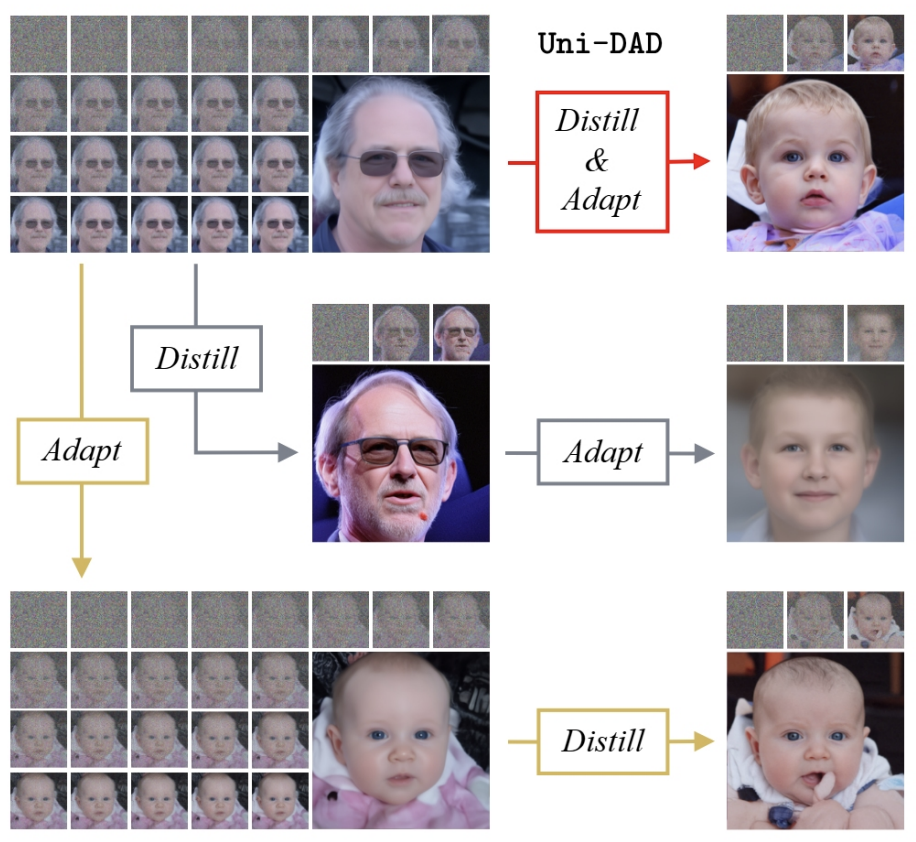
Uni-DAD thumbnail
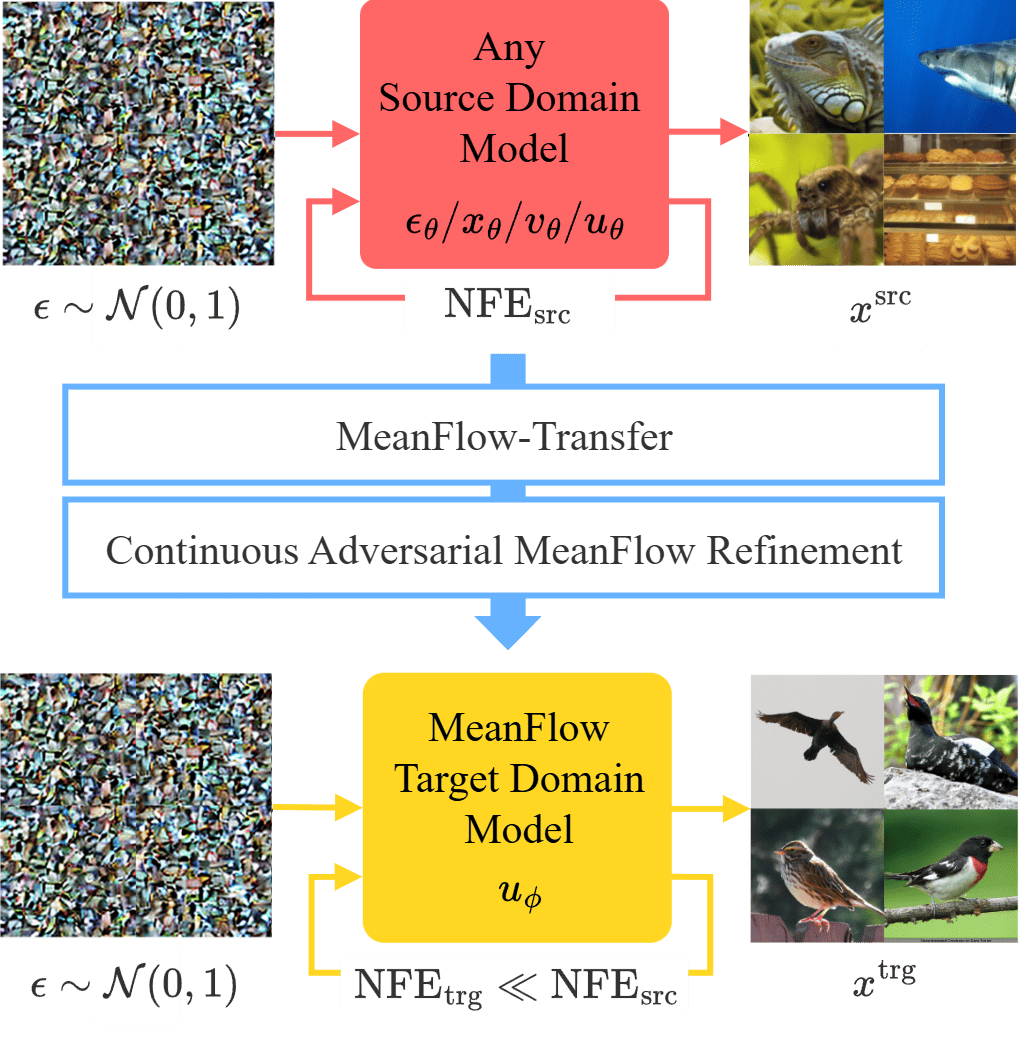
Uni-DAD: Unified Distillation and Adaptation of Diffusion Models for Few-step Few-shot Image Generation
Y Bahram, M Desbos, M Shateri, E Granger
Under Review

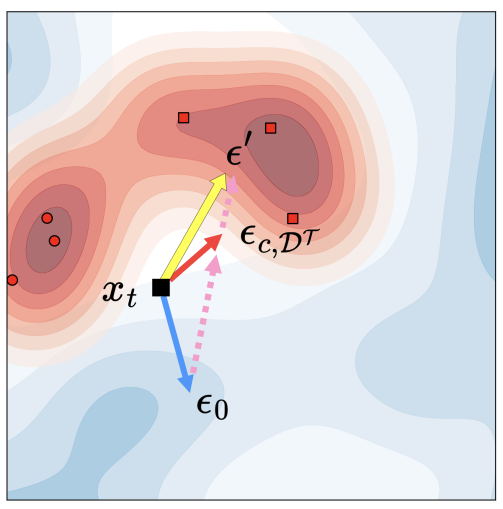
DogFit thumbnail
DogFit: Domain-guided Fine-tuning for Efficient Transfer Learning of Diffusion Models
Y Bahram, M Shateri, E Granger
AAAI 2026 (2026)

Fairness CFE thumbnail
Fairness auditing through the lens of Counterfactual Explanations
Y Deldjoo, M Varasteh, YM Bahram, N Tintarev
Draft Manuscript (2022)
Abstract
A wide variety of fairness metrics and eXplainable Artificial Intelligence (XAI) approaches have been proposed in the literature to identify bias in machine learning (ML) models that are used in critical real-life contexts. In this paper, we present an approach that ties the evaluation of the fairness of machine learning models to the expense (or conversely the simplicity) of generating counterfactual explanations (CFE). Considering the relative importance of each feature class towards obtaining the desired outcome, we attribute different scores to each feature value and propose model-agnostic concepts of Qualification and Effort, respectively, indicating the candidate's strength and the adjustments that must be made to the candidate's profile in order to alter the classifier's output. To ensure a fair comparison, we further group candidates based on their Qualification scores. We additionally utilize KL-divergence to capture the complex disparities between distributions of the CFE Efforts among the sensitive groups. We empirically evaluate fairness among different sensitive classes for several classifiers on two real-world datasets. We find that the majority of classifiers exhibit unfair propensities towards the minority groups. However, some models exacerbate the bias more than others. Also, we find that classifiers tend to behave differently for members of each Qualification group. Our results show that our method can successfully be used for fairness evaluation of classification models based on CFEs.

Post-Regularization thumbnail
Overfitting is not a dead-end: A survey and outlook on post-training regularization
YM Bahram, MA Sadeghi
Draft Abstract (2023)
Abstract
Machine learning (ML) relies heavily on regularization, as it allows better generalization to unknown data, even with imperfect optimization procedures and datasets. There are, however, major problems with regularization that have surprisingly received little attention so far. Regularization methods traditionally avoid overfitting. But when overfitting happens, they usually fail to fight it and cannot bring the machine learning model out of its adverse situation. As a result, the stage of overfitting is taught of as a dead-end in the ML community. This idea has consequently forced the system designers to perform expensive hyperparameter searches, retraining the model from scratch every time with new configurations. It has also led to similar complications in the ever-changing dynamic usages of static pre-trained models. Defying the overfitting dead-end misconception, we argue that even a model that is overfitting includes useful information about the task at hand, and being able to adjust the regularization strength by using this information after the overfitting further solidifies this suggestion. This process ideally requires the disentanglement of the regularization process from the initial stages of the training phase and being able to apply the regularization as a post-processing step with low cost. This would allow adjusting the regularization strength of pre-trained models efficiently, which is an increasingly viable concept given the prevalent use of large neural networks today in many domains and applications. There already are implicit and explicit traces of this idea, which we call Post-Regularization, in a wide range of existing works from several domains. However, there exists no unified view of this concept. In this work, we formalize Post-Regularization, and provide a novel taxonomy of regularization, from the perspective of when the regularization is applied with respect to the model training to help bring together the ideas that can potentially be further explored in this area. We hope that this work attracts more attention to Post-Regularization and provides a foundation for future related work.

Teaching

Teaching Assistant for Graduate University Courses

University of Tehran, School of Electrical and Computer Engineering, 2021-2023

  • Deep Generative Models (Lead TA) - Fall 2022
  • Machine Learning (TA) - Fall 2022
  • Advanced Deep Learning (TA) - Spring 2022
  • Data Analytics and Visualization (Lead TA) - Fall 2021

Teaching Assistant at the Neuromatch Academy Deep Learning Summerschool

Online, 2022-07

I was selected as TA for full-time supervision on the learning of 16 students from different countries, and leading 2 research group projects during 3 weeks. The topics covered a wide and comprehensive range of Deep Learning subjects (Curriculum).


Mentor at HooshBaaz Data Analytics Summer Bootcamp

University of Tehran, School of Electrical and Computer Engineering, 2022-07

Group collaboration with 7 other mentors for educating 80 students during 14 data science workshops. (LinkedIn, Github)


Personal Teaching Experience

Online, 2021-07

Created over 2 hours of tutorials on Machine Learning with Python in Persian language with Hands-On exercises. The tutorial covered the basics of machine learning, the primary methods and models of classification and regression, and dimensionality reduction. I published the videos on Youtube and the codes on Github.


Projects

Last update 2024

Deep Learning and Machine Learning

All projects on Github here.

Trustworthiness:
  • Adverserial Training vs. Angular Loss for Robust Classification
  • SHAP, LIME, and D-RISE Explanations
  • Backdoor attacks and OOD detection
Generative Models:
  • Timestep-Wise Regularization for VAE on Persian Text
  • BigBiGAN analysis + Combining it with InfoGAN
Self-Supervised Learning:
  • Autoencoders and PixelCNN for Downstream Tasks
  • Contrastive Predictive Coding
  • SimCLR Analysis
  • Unsupervised Representation Learning via Rotation Prediction
Embeddings:
  • Visual Question Answering
  • Transfer Learning using EfficientNet-B0
  • Multimodal Movie Genre Classification
Vision:
  • Efficient Instance Segmentation of pathology images via Patch-Based CNN (Related to my bachelor’s thesis)


Data_Projects

All projects on Github here.

Data Pipeline (Large-scale project)
  • A real-time BigData system for monitoring, analysis, and prediction of online Persian Tweets
NoSQL
  • Working with NoSQL Databases (MongoDB, Neo4j, Cassandra, and Elasticsearch)
Spark and GraphX
  • Text analysis, logFile mining, stock market analysis, and Wikipedia analysis
Data Analytics
  • Crawling static and interactive Iranian webpages
  • Spotify data gathering + data analysis + Recommender system

For Fun

https://open.spotify.com/user/yara.mohamadi